Our safety protocols · Spain and Peru
Ayahuasca Retreat Safety
Safety, for us, is how we hold each person: one living tradition, a qualified team, and time to get to know you. The same in Spain and Peru.
- 1Your process leadsEvery journey is individual. You take an active part in your own experience, and nothing is imposed.
- 2One living traditionPeruvian maestros of the Shipibo lineage. A tradition passed down unbroken, never mixed with other plants or practices.
- 3A qualified team in the roomPsychologists and psychotherapists beside the maestro, and a sober team member for every three to four participants.
- 4Prevention, start to finishScreening developed with clinical psychologists, full programs only, and support after you go home.
Since 2017Rated 5.0 on REVIEWS.io and GoogleThe APL standard
Our approach
We connect people with the culture of the Shipibo, with care from a qualified team.
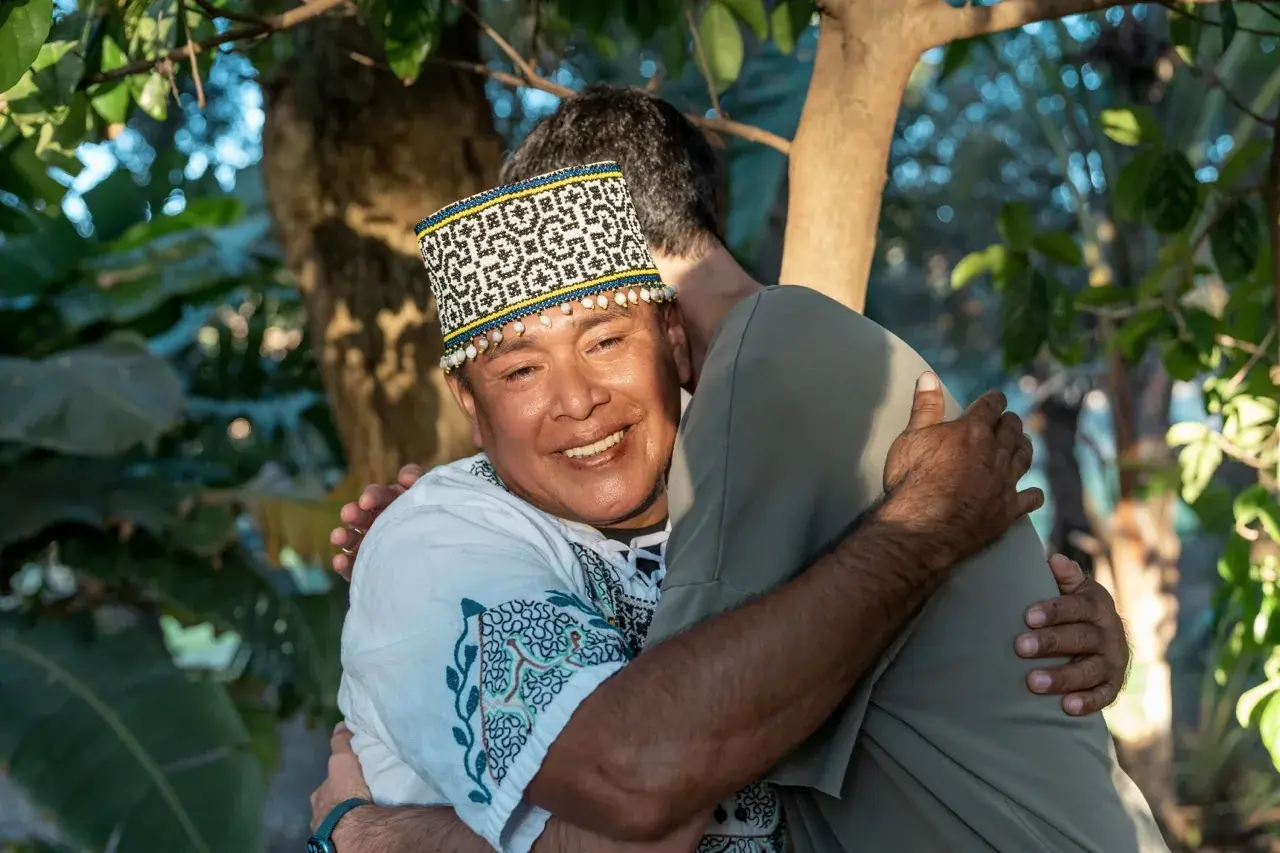
Our team of partner therapists and facilitators works beside Peruvian maestros of the Shipibo lineage. Together we create a space for self-exploration and connection with the tradition: to find meaning and direction, let go of heavy memories and experiences, and find balance between the world inside you and the world around you.
Working responsibly starts with knowing our role. We are not a medical facility and we never promise to cure illness: promises like that create false hope and can pull people away from the care they need. What we offer is what we know: a living tradition, a qualified team beside you, and the time and space to do your own inner work.
Before, during and after
Your Journey With Us
We only run full programs, never single ceremonies.
This work needs preparation before and integration after. This is what the whole journey looks like. Fluent English is required, so you can follow every explanation and conversation.- After you applyScreeningA questionnaire developed with clinical psychologists and read by our team. A call with a partner therapist when needed. Fluent English is required.
- 21 days beforeGroup chat opensYou meet your group and the team.
- 14 days beforeMotivation letterWhat you are coming for, in your own words.
- 7 days beforeCall with the teamAll your questions before you travel.
- The program7 days in Spain, 8 or 12 in PeruDay by day below.
- First days homeTime to settleWe recommend at least three quiet days.
- AfterGroup call and open chatA group call with the therapist, private sessions with a therapist on request, and the chat stays open for as long as you need.
The program
Day by Day
- Day 1Arrival, meet the groupNo ceremony
- Day 2Orientation with the maestro, private talksCeremony 1The maestro sings for the whole group
- Day 3Morning questionnaire, integration circle, private talks with the therapist and the maestroCeremony 2From now on, group and individual songs
- Day 4Rest day: morning questionnaire, integration circleSinging circle
- Day 5Group meeting on Shipibo tradition, culture and dietasCeremony 3
- Day 6Morning questionnaire, integration circle, private talks with the maestroCeremony 4
- Day 7Morning questionnaire, closing circle, travel home
The team in the room
Who Holds the Ceremony
- Knowledge and tradition
Maestro
Peruvian maestros of the Shipibo lineage lead the ceremonies, share their knowledge and culture, and help you see your own path towards what you came for. An interpreter joins every talk, so nothing is lost in translation.
- Support
Partner therapists
Qualified psychologists and psychotherapists who work with us as partners, under their own professional license, advising and supporting in a non-clinical role. A female therapist is always in the room.
- Care
Facilitators
Trauma-informed and sober, looking after the room and everyone in it through the night.
- Learning
The whole team
We keep learning inside the tradition: dietas in Peru with the maestros, social projects in Shipibo communities, and training and certifications kept up to date.
During the night
In the Ceremony
- 1
Your own process
Every journey is individual. We follow yours through the morning questionnaire, integration circles and private talks, and we keep track of each serving. You take an active part in your own experience.
- 2
Your choice
Before each ceremony we ask how you would like to be served. You can drink less, not drink, or sit out a ceremony.
- 3
Space for your experience
Nobody steps into your process or touches you without your consent, unless you need help.
- 4
Ceremony rules
We follow Shipibo ceremony rules: silence, no phones and no contact between participants, so each person can stay with their own experience.
- 5
With you through the night
The team stays with you as long as anyone needs. After that, an emergency button in the room calls the team back at any hour.
- 6
A safe space for everyone
Everyone signs our code of conduct on arrival, with zero tolerance for harassment. Something feels wrong? Talk to the project coordinator on site or write to team@apljourneys.com, also after the program.
Prevention first
Safety starts long before the first ceremony. Since 2017, prevention has been the core of our work.
Prevention starts with careful screening before you arrive.
Programs with several ceremonies (four in most) give us time to get to know each person without rushing, and to understand their limits and needs.
Since 2017, thankfully, no participant has needed a hospital because of ayahuasca. For anything else that first aid cannot handle, we drive you to hospital straight away.
Travel insurance with medical cover is recommended.
Why only Shipibo
One Tradition, One Path
Every teacher plant comes from its own tradition, with its own body of knowledge. The Shipibo tradition is one of the few that came through the missionary era unbroken, passed down from generation to generation. This is what it holds:
- 1
The dieta · sama
The foundation: time in discipline and solitude to build a relationship with the plants.
- 2
Teacher plants · rao
Each plant has its own spirit and its own knowledge.
- 3
The maestro · onanya
Knowledge passed down within families, from generation to generation.
- 4
Songs · ikaros
Received during the dieta and sung in ceremony.
- 5
The brew · oni
Banisteriopsis caapi “cielo”, always the same recipe.
- 6
Mapacho · tobacco
Tobacco smoke, blown to prepare and protect.
- 7
Flower baths
A cleansing bath before ceremony.
Cruzado, “crossed”
We respect every plant and every tradition: each has its own path and its own wisdom. Mixing those paths, for example ayahuasca with peyote or bufo, brings different energies into conflict. The Shipibo call this cruzado, “crossed”: the energies pull against each other, the process becomes harder to hold and to integrate, and a person can stay unsettled long after the ceremony.
One path, in practice
Keeping to one path keeps the work clear. One traditional Shipibo brew, always the same recipe, and nothing from outside the Shipibo tradition. Ayahuasca ceremonies in Spain. In Peru, ayahuasca ceremonies and the dieta: the deeper, foundational discipline of Shipibo work with teacher plants.
International guidelines
Guidelines We Draw On
Our team has completed the ICEERS AyaSafety training, and our practices draw on these international guidelines:
- 1Towards Better Ayahuasca Practices · ICEERS↗
- 2Increasing the Safety of Ayahuasca · ICEERS Academy↗
- 3Managing Sharing Circles · ICEERS↗
- 4Sexual Abuse Awareness · Chacruna Institute↗
We also support university research on ayahuasca and social projects in Shipibo communities: our mission · social impact.
Before you book anywhere
How to Choose a Safe Ayahuasca Retreat
Our advice, wherever you go: ask these questions. Here is how we answer them.
- 01
Who leads the ceremonies, and in which tradition?
Peruvian maestros of the Shipibo lineage, with a lifetime of traditional training in the Amazon
- 02
Who else is on the team, and what are their qualifications?
Partner therapists (qualified psychologists and psychotherapists), and a team trained in programs such as ICEERS AyaSafety, trauma-informed care and Psychedelic Harm Reduction and Integration Therapy (PHRI)
- 03
How big are the groups?
Small: up to 15 in Spain, 6 to 12 in Peru, with a team member for every three to four participants
- 04
Who reads my screening?
Our team, using a questionnaire developed with clinical psychologists; a partner therapist joins when needed
- 05
How do you follow my process during the program?
One confidential record per person: screening, morning questionnaires, servings, notes from circles and private talks, shared only with the team members who need it
- 06
Does the team drink?
No, only the maestro
- 07
What is in the brew?
One traditional recipe, nothing added
- 08
How far is the hospital?
15 min in Spain, 50 min in Peru
- 09
Can I say no, or drink less?
Always, we ask before every ceremony
- 10
Who do I talk to if something feels wrong?
The coordinator on site or team@apljourneys.com
Questions
Safety FAQ
Something we have not answered? Write to team@apljourneys.com and the team will reply personally.
Before you come
01Are ayahuasca retreats safe?
It depends on screening, the team, the setting and aftercare. Ayahuasca is not right for everyone and no honest retreat can promise nothing will go wrong; a good one reduces risk at every step. Read about the risks.
02I have never tried ayahuasca. Is this for me?
Most of our participants come for the first time. Screening, preparation and the first ceremony are there to help you find out, gently and with support, whether this work is right for you.
03Do I need fluent English?
Yes. All explanations, circles and talks are in English (with an interpreter for the maestro), and following them is part of your safety.
04Can I come if I take antidepressants or other medication?
Some medications do not mix safely with ayahuasca. Tell us everything you take; we share general information and ask you to talk to your prescribing doctor. Never stop a medication on your own.
During the program
05What if I feel I am losing control?
It is a common worry, especially before a first ceremony. You are never alone: the team is in the room, the first day has no ceremony so everything is explained beforehand, and you choose your own pace, including drinking less or sitting a ceremony out.
06Is there a doctor on site?
No. We are not a medical facility. A therapist is at every ceremony, we keep first-aid equipment, and anything more goes to hospital by our own transport.
07What if I feel unwell during or after a ceremony?
Ask, and a facilitator or the therapist comes to you. When the team has left the room, the emergency button calls them back.
After, and practical
08What support is there after the retreat?
An open group chat, a group call with the therapist, free integration support through our non-profit partner Nectara, private sessions with a therapist on request, and a therapist recommendation if you would like one.
09Do I need travel insurance?
We recommend insurance with medical cover for the whole trip.
In their words
What Participants Say
Reviews from verified participants on REVIEWS.io, from the first email to the weeks after.
- Before you travelUUlaPortugal
“APL ensures you’re thoroughly prepared for the journey ahead. … They cover everything - from dietary recommendations to emotional readiness - so you feel confident stepping into the process.”
Verified review · REVIEWS.io · Jan 2025 - Your first timeDDanielUnited Kingdom
“It was my first time on a APL journey or retreat of this nature. … The experience was professionally operated and the people I met are incredible.”
Verified review · REVIEWS.io · Apr 2025 - The teamGGuillermoAustria
“I can only express my most sincere gratitude and respect to APL and their experienced and knowledgeable facilitators.”
Verified review · REVIEWS.io · Jan 2025 - In the ceremonySSimonaRomania
“…remarkable people who helped me experience, for the first time in my life, what it means to feel completely safe, accepted, present.”
Verified review · REVIEWS.io · May 2024 - After you go homeSSabinaIreland
“They have qualified psychologists to help all the participants on their integration inside the retreats and outside it.”
Verified review · REVIEWS.io · Apr 2025 - Overall
Where we work
Same Practices, Two Places
Everything on this page applies in both places. What changes is the landscape.
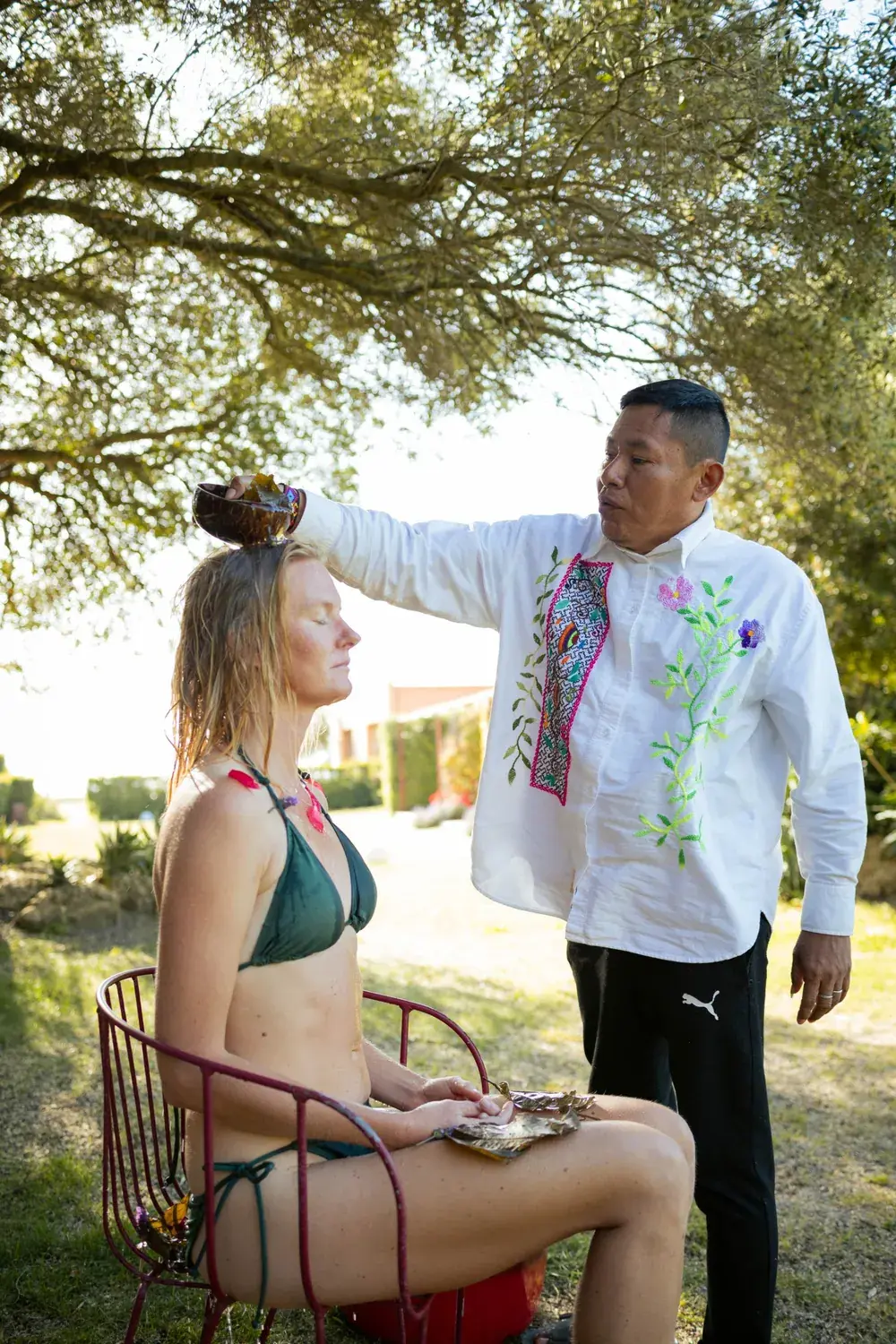 Spain · AndalusiaOcean-front center in Andalusia7 days · up to 15 people
Peruvian maestros of the Shipibo lineage and a therapist at every ceremonyExplore Spain
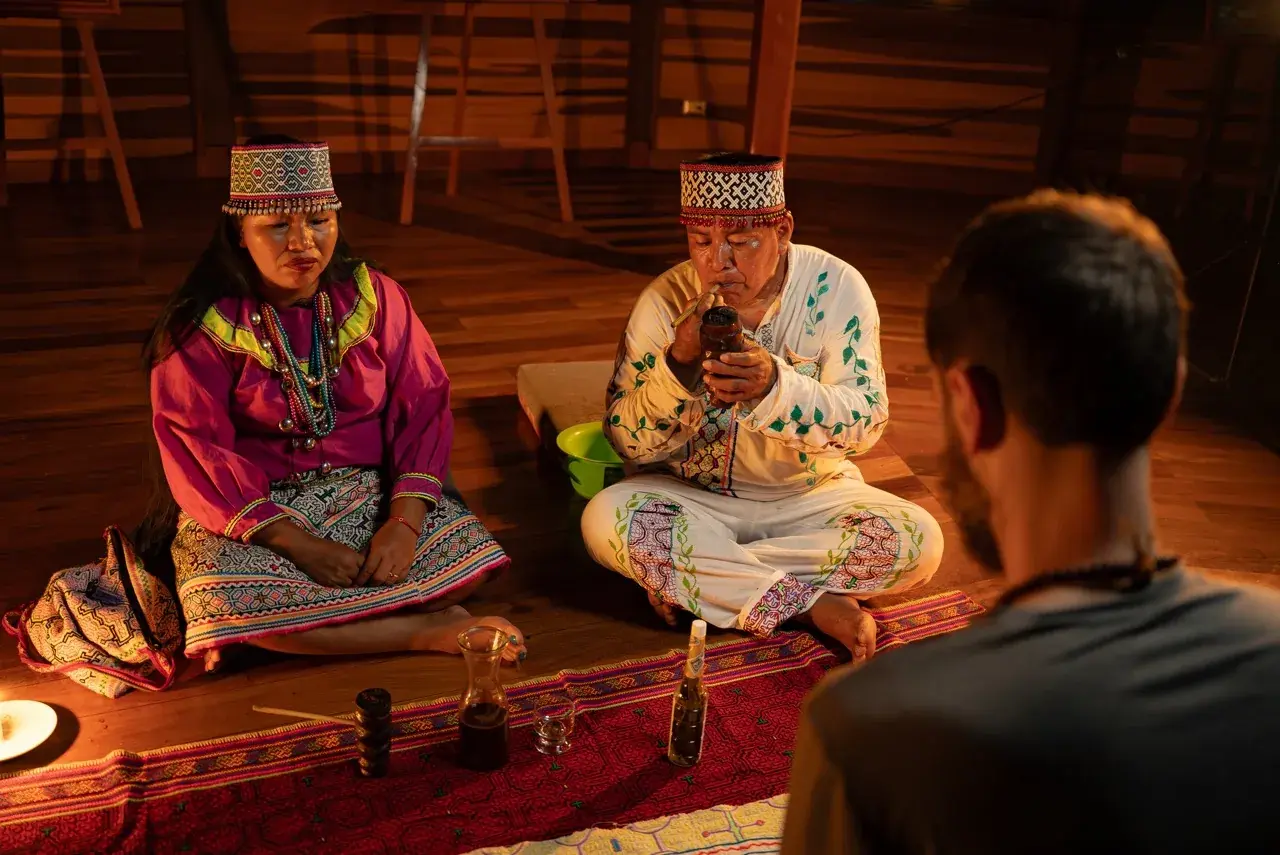 Peru · Pucallpa, AmazonOur camp near Pucallpa in the Amazon8 or 12 days · 6 to 12 people
Peruvian maestros of the Shipibo lineage and a therapist at every ceremonyExplore Peru
The same in both
- Peruvian maestros of the Shipibo lineage
- Screening before you book
- A therapist at every ceremony
- A sober team member for every three to four
- No ceremony on day one
- Support after you go home
Last updated: November 2026