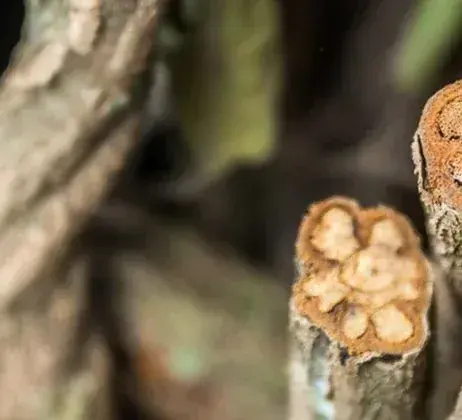
What Is Ayahuasca?
Ayahuasca is a brew from the Amazon made from the Banisteriopsis caapi vine, often cooked with the leaves of a plant that contains DMT. In the Shipibo tradition of Peru it is drunk at night with a maestro, and it is understood as a teacher: it shows you what you need to see.
What Is Ayahuasca Made Of?
A vine and a leaf, cooked slowly for many hours.
Most ayahuasca brews are made of two plants. The ayahuasca plant itself is the Banisteriopsis caapi vine, which contains harmala alkaloids such as harmine. The leaf, most often chacruna (Psychotria viridis), contains DMT.
-
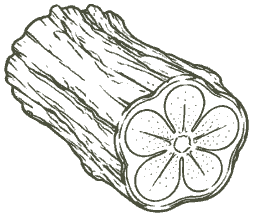 The vineBanisteriopsis caapiHarmine and other harmala alkaloids. They slow down the MAO enzyme in the gut.
-
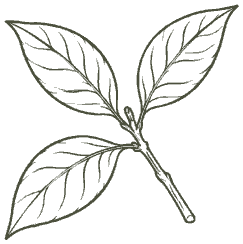 The leafChacrunaPsychotria viridis. Contains DMT, which on its own is broken down by MAO.
-
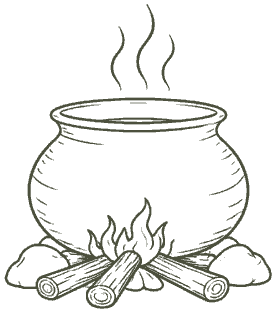 TimeMany hoursCooked together slowly into a thick, bitter brew.
-
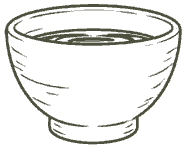 The brewAyahuascaThe most classic ayahuasca recipe. Each tradition and maestro makes it in their own way.
Swallowed on its own, DMT is broken down in the gut by an enzyme called MAO; the alkaloids of the vine slow that enzyme down, so the DMT from the leaf can act. Some traditions use other leaves, and some drink the vine alone.
Is ayahuasca DMT?
Not exactly. Many brews contain DMT, but the vine is the heart of ayahuasca: in Shipibo the brew is called nishi, the vine, or oni. Compared with DMT on its own, ayahuasca lasts much longer and unfolds differently: it can be very strong, but it comes as a force you can interact with while staying aware.
Ayahuasca in 30 seconds
- 01What is it?
- A brew of the ayahuasca vine, often with a leaf that contains DMT. The Shipibo call it oni.
- 02What does the name mean?
- Ayahuasca is a Quechua word, usually translated as “vine of the soul”. Say it eye-ah-WAH-skah.
- 03Where does it come from?
- The Upper Amazon of Brazil, Colombia, Ecuador and Peru. Among the Shipibo of Peru the knowledge is still passed down from grandparents to grandchildren.
- 04How is it drunk?
- It depends on who serves it. In the Shipibo tradition: at night, in ceremony, a small cup at a time, guided by a maestro who sings ikaros.
- 05How long does it last?
- The effects usually last 4 to 6 hours. A Shipibo ceremony begins at sunset and lasts about 4 to 5 hours. How long ayahuasca lasts →
- 06Who holds the ceremony?
- On our programs: a maestro of the Shipibo lineage, a partner therapist and trained facilitators, with screening before you come. Our safety protocols →
By Boris, Lead Facilitator, APL Journeys · Last updated: November 2026
What Does Ayahuasca Do?
For four to six hours, ayahuasca changes how you perceive yourself and the world. Emotions grow stronger, memories return with a new meaning, visions may appear with the eyes closed or open, and the body takes part too. You stay aware of what is happening, and you remember it afterwards.
Release. The body often takes part in letting go: through tears, sweating, yawning, shaking, vomiting or diarrhoea. In the Shipibo view this release is part of the process, and the team is always close by. What ayahuasca feels like

- 1Memoriesreturn with a new meaning
- 2Visionsmay appear with the eyes closed or open
- 3Emotionsgrow stronger, old feelings come up
- 4The bodylets go through release
Sounds familiar?
You may recognise yourself in one of these.
The reasons people come to us most often, in their own words.
I’m at a turning point and don’t know which way.
To find direction. At a turning point: a loss, a change of work or country, a question that has no answer yet.
Something from the past still weighs on me.
To let go of what weighs on them. Grief, old resentment, something life has left undigested.
I feel cut off, from myself and from the people I love.
To reconnect. With themselves, with the people they love, with nature.
I keep repeating the same patterns.
To understand themselves. To see their patterns, choices and relationships from a new angle.
I want to learn from the source, not from a book.
To meet a living tradition. Not only to have an experience, but to learn from the maestros who keep it.
I’ve been running on empty for too long.
To step out of a long period of stress. To stop, slow down and look at their life from outside the daily rush.
Who Drinks Ayahuasca With Us?
Many picture young backpackers in the jungle. The people who come to our ceremonies are mostly in the middle of their lives: from more than 80 countries, women and men in equal numbers, working in business, technology, healthcare and the arts. Some are new to ayahuasca, others are experienced and want to go deeper within one tradition.
- Business and management
- Technology
- Finance, law and consulting
- Arts and media
- Medicine
- Psychology and coaching
- Engineering
- Education and science
What you take home depends less on the cup than on your preparation, the maestro and what you do with it afterwards. The rest of this page explains each of them.
Afraid of losing control?
Everyone is different. For some the effects begin within half an hour, for others only after an hour and a half, and no two nights are the same. The chart shows a typical shape, not a timetable.
What you can hold. Keeping the night within it is shared work: the maestro and the team guide it, and you take part by preparing, staying present and telling us how you feel.
A force you can meet
Ayahuasca can be gentle, and it can be strong. In the Shipibo tradition that depends on the lesson a person needs. It comes as a living force, a teacher, and you can meet it with awareness: ask a question, listen, let go, come back to your breath and to the maestro’s song. That is what makes it different from simply losing yourself.
Staying aware
It is one of the most common worries before a first ceremony, and a natural one. For the Shipibo, and for us, what matters most is accepting the experience, whatever it brings, while staying in charge of how you respond to it. So the aim of a ceremony is not to drift away into unconsciousness but to stay aware, so you can work with the process and with the strength of the plant. The maestro guides the night with his songs, and the team sits close by in the dark: you can always call a facilitator. When the experience grows strong, the way through is not to hold on tighter but to breathe, follow the songs and let it move.
Oni: How the Shipibo Understand Ayahuasca
A teacher, not a substance.
The Shipibo call ayahuasca oni, a word linked to wisdom and knowledge. For them it is not a substance but a teacher. Our maestros also call it a doctor: you tell it what troubles you, and it looks, shows and guides. Maestro Pepe calls it the grandmother, the one who taught him which plants to learn from.
Many worlds, and the vine between them
In Shipibo the word nete means world, life and day at once, and there is more than one world. The elders say there are as many worlds as there are living beings.
- Above
Jakon Nete
Above is Jakon Nete, the beautiful world of the sun, the moon and the stars, a world of harmony and hope. The elders call it the good world, the land without evil. The strength of the maestro’s songs is said to come from here, not from the maestro himself.
- Our world
Non Nete
Non Nete is our world, shared by people, animals and the spirits of plants. Each plant also has a world of its own, with an owner who looks after it.
- Below
Jene Nete
Below it lies Jene Nete, the world of water, home of Ronin, the great anaconda, mother of the rivers. It is almost a mirror of ours: under the water there are villages, people and deep knowledge. The elders say the kene designs came from here, and Ronin keeps the rivers flowing.
Long ago people, plants and animals shared one language. When it was lost, the worlds drifted apart. Through the dieta and the song, the maestro learns to cross between them again.Shipibo onanyabo told this to the anthropologist Giuseppe Caruso (Onaya Shipibo-Conibo, 2005). Pedro Favaron and Chonon Bensho, from a Shipibo family of maestros, write the same in Rao bewa (2022).
Ayahuasca is the bridge between these worlds.
In ceremony the maestro travels along it with his ikaros, calls the owners of the plants he has dieted and asks them to help each person. That is why, in the Shipibo view, what you see and feel in a ceremony is not random: it is a teaching that comes to you from the other side.
The more we open ourselves to meeting what is sacred in the Shipibo world, the more sacred the experience can become. This is also why the maestro sings all night, why the space is protected, and why the tradition treats every ceremony with respect.
Every plant has a spirit
For the Shipibo every plant has a body, its trunk, leaves and flowers, and a world of its own, looked after by its owner, ibo, often called its mother. The strongest plants hold great knowledge, and they share it only with those who come with respect. Before cutting a tree for a canoe, an elder would first speak to the owner of that kind of tree and ask permission.
“In my first vision I saw that every plant has its power, its energy, its respect and its rules.”
Maestro Pepe

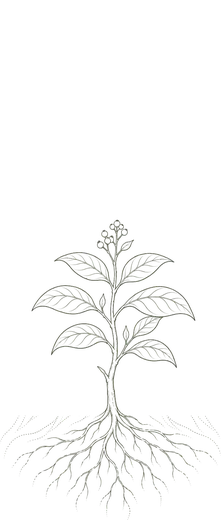 IBO, THE OWNER THE PLANT’S OWN WORLD
Ayahuasca te marea, la chacruna colorea
Roughly: “ayahuasca takes you under, chacruna brings the colour”.
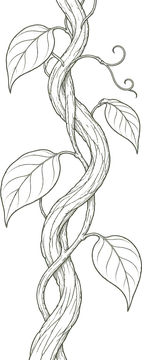 The vineGives the teaching
It brings the mareación, the deep immersion in which ayahuasca shows and explains. The vine is the heart of the brew: drunk on its own in the right amount, it can take a person very deep.
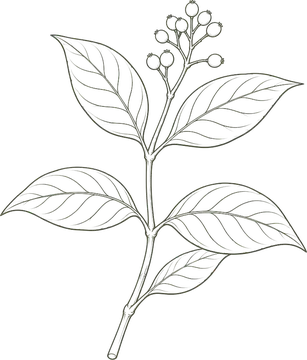 The leafBrings the light
Chacruna helps you understand the message of ayahuasca. It brings the light and the colour, so what the vine shows becomes clearer and easier to see. In the pot its fresh leaves are laid over the vine.
The Maestro’s Path
Knowledge that comes from the forest.
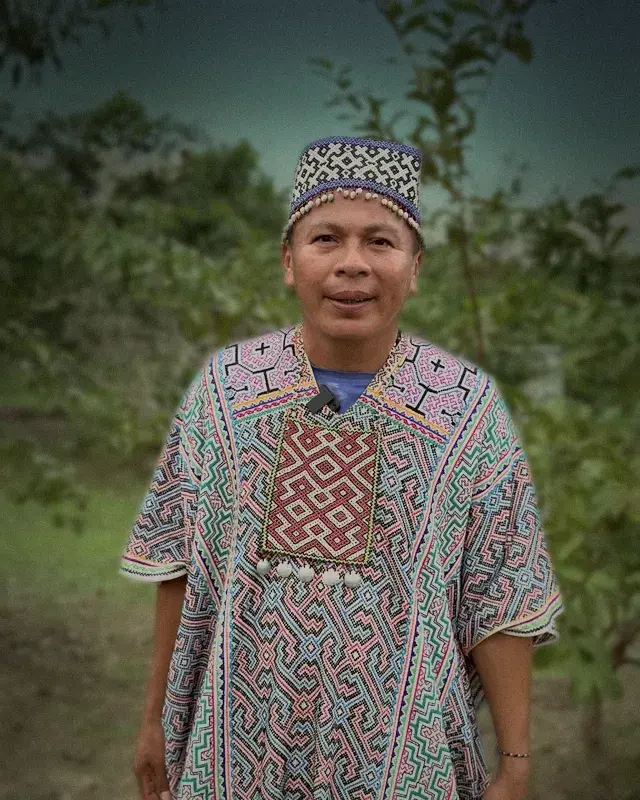
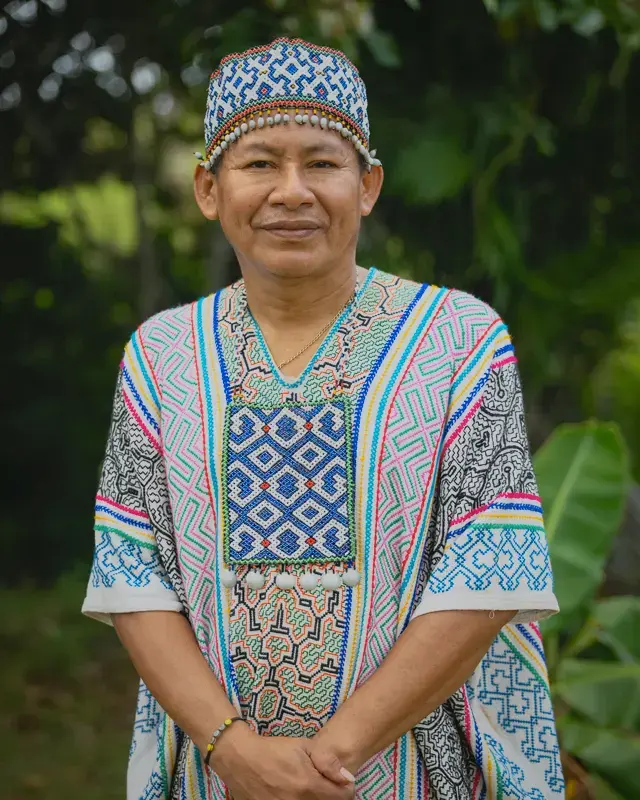
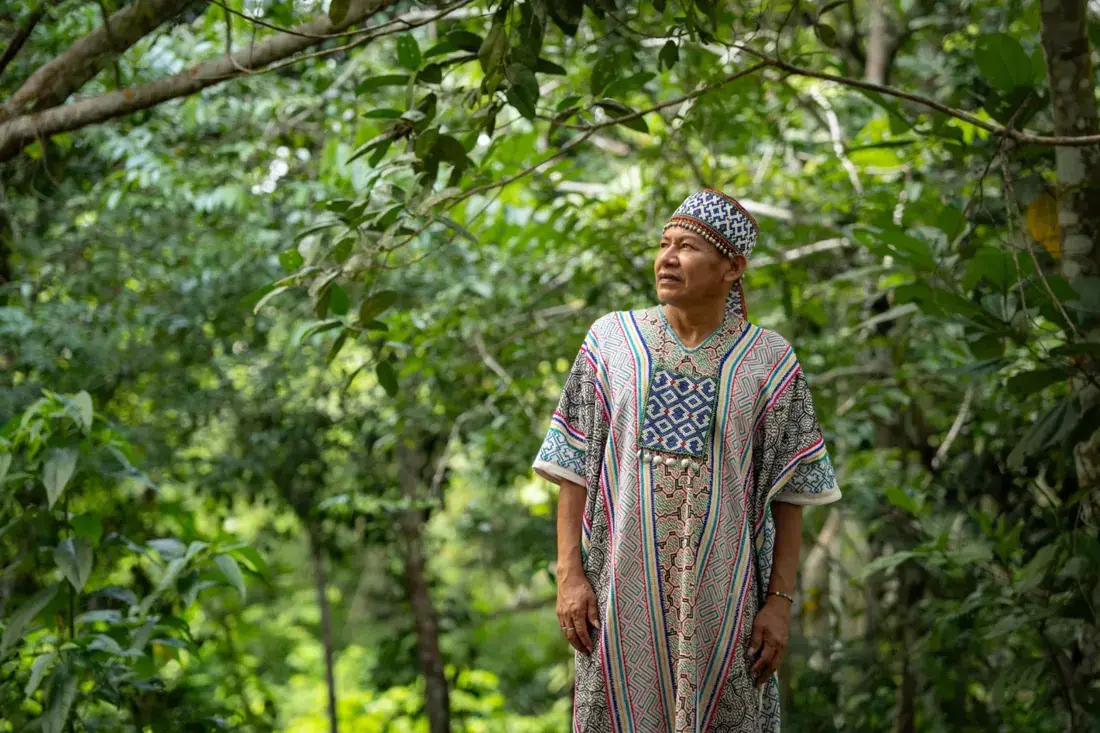
The maestros we work with, in Peru and in Spain, are the brothers Maestro Noe and Maestro Sani, from a family lineage of Shipibo onanyabo. It is this family, its lineage and its knowledge that we bring to our programs.
A Shipibo maestro is called an onanya, “one who knows”. That knowledge does not come from books. It comes through sama, the dieta: months and years in solitude in the forest, eating without salt or sugar, drinking teacher plants one after another. The two brothers learned from their grandfather. They began as young men and still continue the path of dietas and of learning the plants today.
Their family is among the founders of ASOMASHK, the association of Shipibo onanyabo, which has brought together more than a hundred maestros to preserve this knowledge. Today the association is led by another of their brothers. This is what they bring to our programs: a living tradition and their own experience, shared first-hand.
Why the maestro sings
- bewa
- a song
- rao bewa
- a song with the strength of the plants
- ikaro
- the word used across the Amazon
A maestro does not compose these songs or learn them by heart. They come during the dieta, from the plants he keeps for years to earn their wisdom and their strength.
“They come by themselves. You sit in silence, a sound comes, a chant, and you start to sing, because the plant is teaching you its song.”
Maestro Noe
In ceremony the song is what guides the night. Without it, the tradition says, the visions can turn into confusion; with it they find their order and their direction. The maestro sings what he sees in that moment, for that person, so no two songs are ever the same. When he names a plant he has dieted, its owner answers.
Peru declared the ikaros of the Shipibo-Konibo-Xetebo people part of the Cultural Heritage of the Nation in 2016, and their kene designs in 2008.
Rooted in their communities
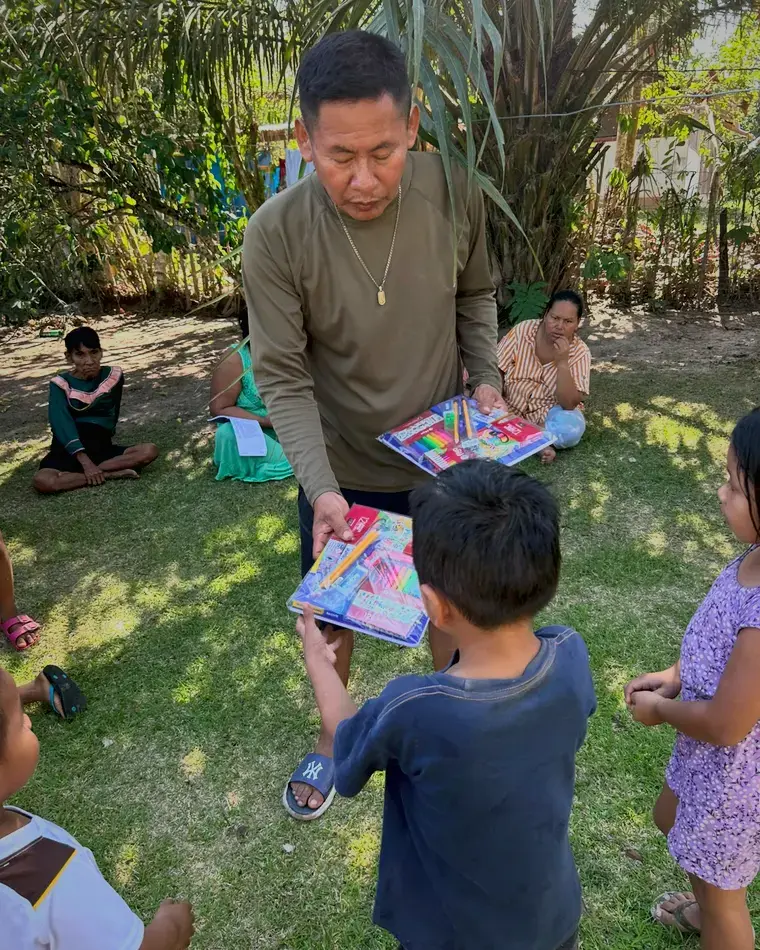
Our maestros live with their families in the Shipibo communities of the Amazon near Pucallpa that they are part of, and keep going through dietas between programs. “A maestro’s knowledge has its source in the forest and in the dietas,” says Boris, our Lead Facilitator. “Without them there is nothing to pass on.” Supporting these communities, and especially their children, is part of our work and matters to us in its own right.
What Happens in an Ayahuasca Ceremony?
A night with the maestro.
A Shipibo ceremony begins at sunset and lasts about 4 to 5 hours. People sit on mattresses in a dim ceremony house. Before drinking, you hold the cup for a moment and tell it, silently, what you came for. Then the candles go out and the maestro begins to sing.
- SunsetThe group gathers in the ceremony house.
- The brewThe maestro charges it with song and tobacco.
- The cupYou hold it and say, silently, what you came for.
- Candles outThe maestro begins to sing.
- Your songFrom the second ceremony on, he sings to each person.
- ClosingHe closes the space, and everyone sleeps protected.
- MorningThe group shares in a circle.
The maestro charges the brew
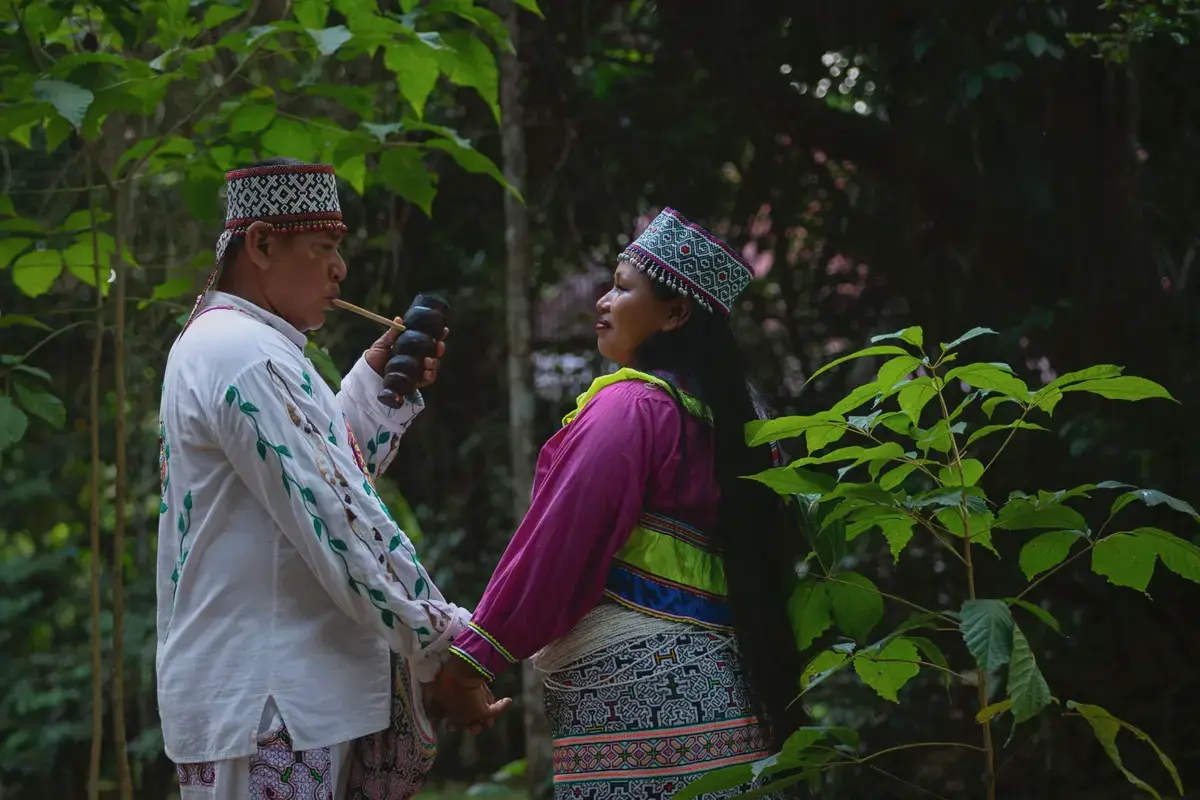
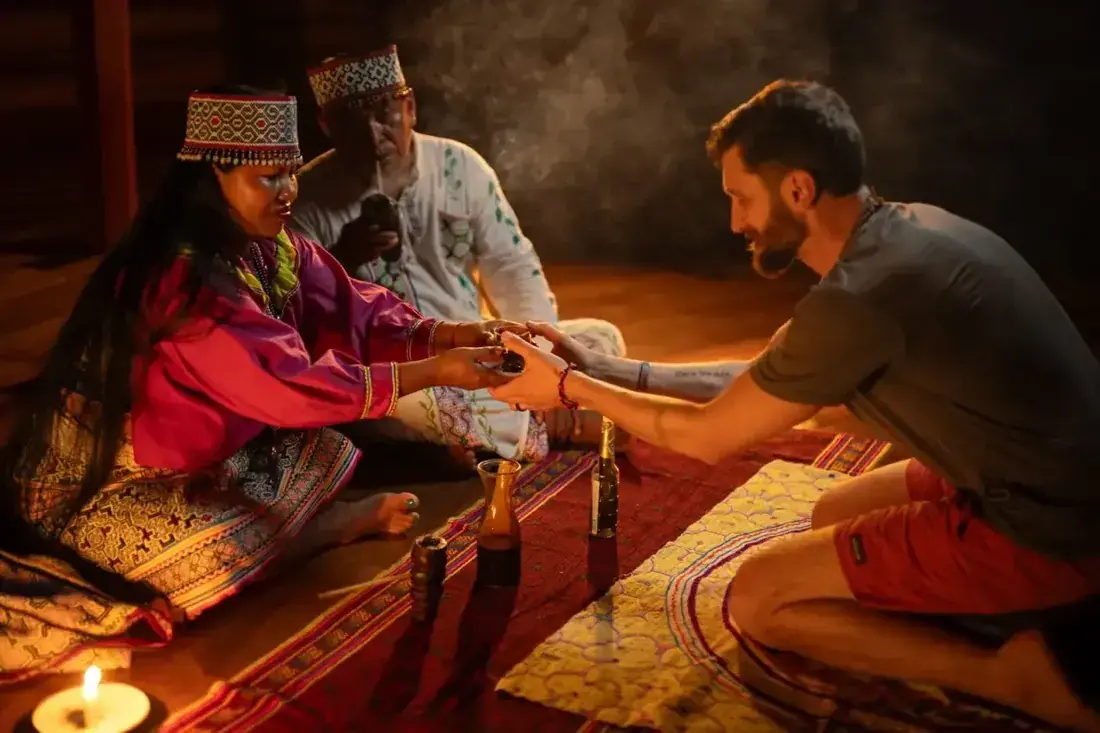
Before the brew is served, the maestro charges it with his song and his strength, in front of everyone. He whistles softly over the cup to connect with the plant and tell it why it is being drunk tonight. He blows tobacco smoke over the brew and around the space, and uses Agua de Florida, a traditional floral water, because in the tradition the beings of the plant world come close to what is clean and fragrant.
The maestro holds the night
The maestro opens the space, calls the plants with his ikaros and keeps each person on their own path. The songs are like a lighthouse at sea, or a torch that guides you through the maze of the experience: when it grows strong, follow the voice. At the end he closes the ceremony, like putting the roof and windows on a house, so everyone can go to sleep protected. That is why we begin together and finish together.
A song for each person
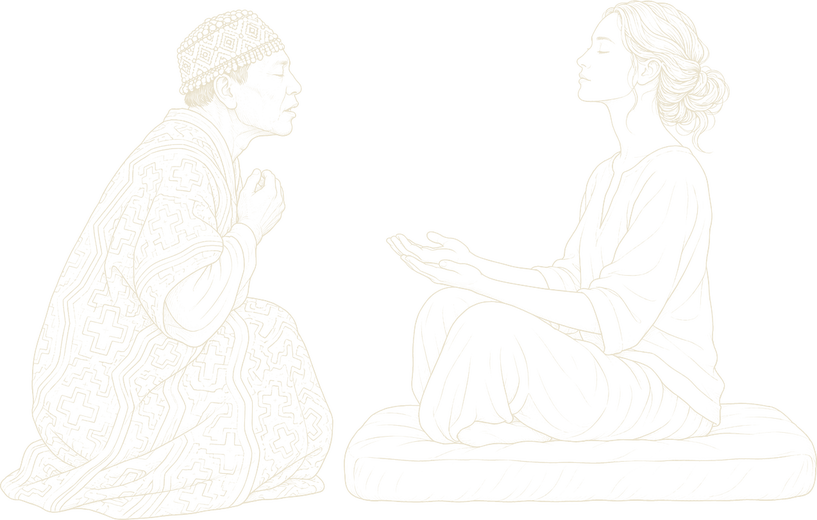
From the second ceremony on, the maestro also sings to each participant individually during part of the night. He sits in front of you and sings what he sees for you in that moment. In the tradition this is the heart of the work: the song is the maestro’s way of working with each person.
Your first ceremony with us
On our programs your first ceremony does not come out of nowhere. It takes place on the evening of the second day: before it, you meet the group, the team and the maestro, and go through the preparation together.
Sensitivity to ayahuasca differs from person to person and has little to do with body size or experience, so on the first night we start gently.
In our ceremonies each person has their own mattress and their own space. During the night people don’t talk with each other, so everyone can stay with their own process; tears and whatever else needs to come out are welcome. The next day the group shares in a circle. There is also one-to-one time with the maestro and with the partner therapist. Who is in the room, and how we keep you safe
“I went in not knowing what to expect… Maestro and the whole team are the real deal.”
Tradition and Psychology, Side by Side
Two languages, one journey.
The maestros and modern psychology describe the same process. Neither replaces the other. Together they explain why preparation, a maestro and support after the ceremony all matter.
The Shipibo tradition
What the maestros say
Modern psychology
What research describes
01Seeing what is inside
In the Shipibo traditionAyahuasca shows you what is inside when you have truly decided, when you surrender and really want to know.
Maestro Pepe
What psychology describesLooking inwardAyahuasca brings on an introspective, dream-like state in which personal memories and emotions come to the surface. Researchers name introspection and emotional processing as one of the core processes of the experience.Soler et al., 2016 · Perkins et al., 2022
02Letting go
In the Shipibo traditionYou cannot fight ayahuasca. You have to accept, to forgive others and to forgive yourself. Tears that fall to the earth are a release.
Maestro Noe
What psychology describesLess judgment, more acceptanceAfter a ceremony people judge their inner experience less and react to it less. After four sessions, acceptance grew about as much as after an 8-week mindfulness course.Soler et al., 2016, 2018
03A new chapter
In the Shipibo traditionWhen you accept, ayahuasca opens your purpose: this is your path now, a new chapter of your life.
Maestro Noe
What psychology describesA new perspectiveInsight, new perspectives and a stronger connection with oneself are described as core parts of the process.Perkins et al., 2022
04Into your daily life
What you understand in the night becomes change only in daily life. The maestro holds the night; our partner therapists help you prepare before and make sense of it after.
What Ayahuasca Is Not
Five common expectations, and what is closer to the truth.
A teacher, not a quick fix.
Common belief
One ceremony will change my life.Ayahuasca shows you the path; walking it is your part. As Boris, our lead facilitator, puts it: “a teacher plant, not a wish-granting genie.”
Work with the inner life, not with illnesses of the body.
Common belief
Ayahuasca cures the body.Maestro Noe is clear about it: in the Shipibo tradition, illnesses of the body are a matter for other plants and dietas, not for a few ayahuasca ceremonies.
A process over several nights, not one big cup.
Common belief
One strong night is enough.The first ceremony is for meeting the plant and finding your sensitivity. The same cup that felt gentle on the first night can take you deep on the third: depth comes from readiness, trust and the maestro’s work, not from drinking more. That is why our retreats in Spain and Peru include several ceremonies, usually four.
Held by a maestro, not taken alone.
Common belief
I can order it online and drink it at home.Drunk alone, ayahuasca loses the people who keep its knowledge and hold the space: the maestro’s song, the team in the room, the preparation before and the support after.
Not habit-forming.
Common belief
Ayahuasca is addictive.Research has not found that ayahuasca causes dependence, and it does not build tolerance: people do not need more to feel the same. The strong physical purge also works against overuse. ICEERS, Ayahuasca safety profile
Coming With an Intention
A direction, not a command.
“Many come wanting to see their purpose, and ayahuasca first shows them what they still need to see, to correct and to accept.”
Maestro Noe
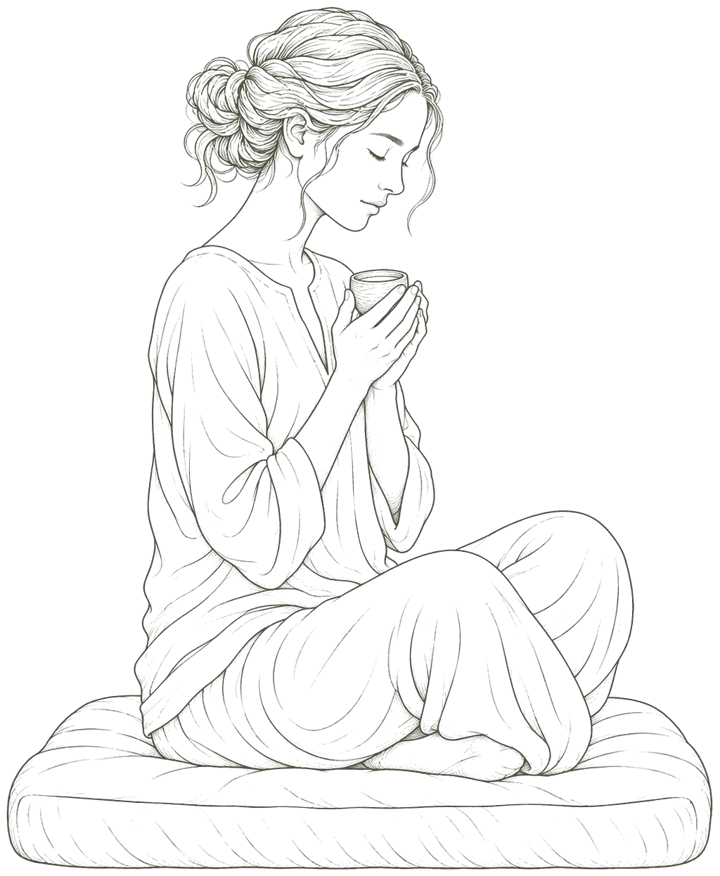
An intention is not a command. It is a direction that comes from the heart more than the head. Then you surrender, because the plant may lead you somewhere you did not expect.
- Instead of
“Show me visions.”Try“Show me what I need to feel.” - Instead of
“Take my fear away.”Try“Teach me about my fear.” - Instead of
“Make them understand me.”Try“Help me understand my part in this.” - Instead of
“Change my life.”Try“Show me why I keep pushing people away.”
Maestro Noe’s advice is simple: come knowing what you want to work on, and tell the maestro. Before your program, our team helps you put it into words.
The foundation comes before the visions
Do not chase visions or spirits from the first night. Like a house, the experience needs a foundation: your inner balance, your relationships, what life has left undigested. The roof comes later.
Give the process time
Some nights are full of light, some are hard. Be kind to yourself and give the process time. In Boris’s words: “Even the world was not made in one day.”
Is Ayahuasca Right for You?
Not for everyone, and not for every moment of life.
Ayahuasca asks for time, honesty and a stable moment in life. These two lists help you see whether a retreat fits you now. Every journey with us starts with screening, so you never make this decision alone.
It may be right for you if
- you are curious about yourself and ready to look honestly at what comes up
- you can give it time: preparation before, a full program of several ceremonies, and integration after
- you want to meet a living tradition, not just have an experience
- you are in a stable period of life and can follow the preparation diet
- you speak English well: our talks, circles and private conversations are in English
It is not for you if
- you or a close family member have had psychosis, schizophrenia or some types of bipolar disorder
- you take antidepressants or other medication that affects serotonin. Never stop a medication on your own: talk to your prescribing doctor
- you have a serious heart condition or uncontrolled high blood pressure
- you are pregnant
- you are going through an acute crisis right now
- you are looking for a single ceremony or a weekend: we only hold full programs
How a journey with us works, step by step: our safety protocols.
Two Places, One Tradition
Since 2017 · 5.0 on REVIEWS.io and Google
We hold ayahuasca retreats in Spain and in Peru with Peruvian maestros of the Shipibo lineage and a therapist present in a supportive role at every ceremony. In both places the maestros serve oni, the traditional Shipibo brew: one recipe, nothing added.
I was nervous beforehand and emailed several times with questions, but I was never made to feel like a burden. That same care carried through the entire experience.
“I researched the best ayahuasca retreats in Europe and APL was the best. I was not disappointed.”
“The ceremonies brought moments of strong emotion, reflection, and a different way of looking at myself and life, all within a space that felt very safe and supportive.”
“My second retreat with APL was just as wonderful as my first.”
Questions About Ayahuasca
Short answers to what people ask most.
What is ayahuasca made of?
Ayahuasca is usually made of two Amazonian plants: the Banisteriopsis caapi vine and the leaves of a plant that contains DMT, most often chacruna (Psychotria viridis). They are cooked together slowly for many hours into a thick, bitter brew. In our ceremonies the brew is the traditional Shipibo preparation, which our maestros call oni.
Is ayahuasca DMT?
Not exactly. Many ayahuasca brews contain DMT from the leaf, but the vine is the heart of the brew: drunk on its own in the right amount, it can bring a very deep experience. Compared with DMT alone, ayahuasca lasts much longer and comes as a force you can interact with while staying aware.
Is ayahuasca a drug?
Ayahuasca is a psychoactive (psychedelic) plant brew. Indigenous peoples treat it as a teacher plant, and it is drunk in ceremony, not for fun. Studies of people who drink it regularly in ceremony have not found the problems typical of drugs of abuse.
Is ayahuasca legal?
It depends on the country. DMT, found in many brews, is a controlled substance in many countries, so the legal status depends on where you are. Country by country: Is ayahuasca legal?
What does ayahuasca do?
For several hours ayahuasca changes perception: images with eyes closed, strong emotions, memories and a different sense of time and of the body. In the Shipibo tradition it is a teacher and a doctor: it first shows what is out of balance, then helps you let go and see your path more clearly. What a person takes from it depends on preparation, the maestro and the work afterwards.
Where does ayahuasca come from?
Ayahuasca comes from the Upper Amazon of Brazil, Colombia, Ecuador and Peru, where many indigenous peoples have used it for generations. A ritual bundle about 1,000 years old, found in Cueva del Chileno in the Bolivian Andes, held traces of harmine and DMT, its two key compounds. Today it is best known through living traditions such as that of the Shipibo of Peru.
What is natem?
Natem is the name the Shuar of Ecuador use for ayahuasca. Across the Amazon the brew has many names: oni and nishi for the Shipibo, yagé in Colombia, caapi, and daime or hoasca in the Brazilian churches that use it.
What does the word ayahuasca mean, and how do you pronounce it?
Ayahuasca is a Quechua word: aya means soul or spirit and waska means vine, so it is usually translated as “vine of the soul”. It is pronounced eye-ah-WAH-skah. The Shipibo call it oni, a word linked to wisdom, or nishi, the vine.
Is ayahuasca addictive?
Research has not linked ceremonial ayahuasca use to addiction. A study that followed regular ceremonial drinkers for a year did not find the problems typical of drugs of abuse, and lab studies report no tolerance after repeated use. Most people drink it rarely, within a full program of preparation and integration.
How long does ayahuasca last?
The effects of ayahuasca usually last 4 to 6 hours: the first effects come after 30 to 60 minutes, the peak at 1 to 2 hours, and a plateau follows until about the third hour. A Shipibo ceremony begins at sunset and lasts about 4 to 5 hours, and many people feel tired the next day.
Who should not drink ayahuasca?
Ayahuasca is not for people with a personal or family history of psychosis, schizophrenia or some types of bipolar disorder, people taking antidepressants or other medication that affects serotonin, people with a serious heart condition or uncontrolled high blood pressure, or pregnant women. Never stop a medication on your own: talk to your prescribing doctor. Every journey with us starts with the screening questionnaire.
Can I come for just one ceremony?
No. Ayahuasca is not one night: the first ceremony is for meeting the plant and finding your sensitivity, and the work deepens over the nights that follow. Our retreats include several ceremonies, with preparation before and support after.
Sources
- Caruso G. (2005). Onaya Shipibo-Conibo: el sistema médico tradicional y los desafíos de la modernidad. Abya-Yala, Quito.
- Favaron P., Chonon Bensho (2022). Rao bewa: los cantos medicinales del pueblo shipibo-konibo. Literatura: teoría, historia, crítica 24(2): 139–165.
- Favaron P., Haya de la Torre J.A. (2023). Jene nete, el mundo de las aguas en la obra de Chonon Bensho. Mitologías hoy 28: 5–18.
- ICEERS. Ayahuasca safety profile.
- Riba J. et al. (2001). Subjective effects and tolerability of the South American psychoactive beverage Ayahuasca in healthy volunteers. Psychopharmacology 154: 85–95.
- Fábregas J.M. et al. (2010). Assessment of addiction severity among ritual users of ayahuasca. Drug and Alcohol Dependence 111(3): 257–261.
- dos Santos R.G., Bouso J.C., Hallak J.E.C. (2017). Ayahuasca, dimethyltryptamine, and psychosis: a systematic review of human studies. Therapeutic Advances in Psychopharmacology 7(4): 141–157.
- dos Santos R.G., Hallak J.E.C. (2024). Ayahuasca: pharmacology, safety, and therapeutic effects. CNS Spectrums.
- Miller M.J. et al. (2019). Chemical evidence for the use of multiple psychotropic plants in a 1,000-year-old ritual bundle from South America. PNAS.
- Soler J. et al. (2016). Exploring the therapeutic potential of Ayahuasca: acute intake increases mindfulness-related capacities. Psychopharmacology 233(5): 823–829.
- Soler J. et al. (2018). Four weekly ayahuasca sessions lead to increases in “acceptance” capacities. Frontiers in Pharmacology 9: 224.
- Perkins D. et al. (2022). Psychotherapeutic and neurobiological processes associated with ayahuasca. Frontiers in Neuroscience 16.
- Ministerio de Cultura del Perú (2016). Íkaros of the Shipibo-Konibo-Xetebo people declared Cultural Heritage of the Nation, RVM 068-2016-VMPCIC-MC.
- Ministerio de Cultura del Perú (2008). Kené declared Cultural Heritage of the Nation, RM 540/INC-2008.
Last updated: November 2026